Back

Guiding Principles for Ethical Professional Practice

First published in 1979 by philosophers, Tom Beauchamp and James Childress, The Four Principles of Biomedical Ethics laid the foundation for ethical decision making in healthcare.  It is used today by the CRTO to provide a framework to guide RT practice. 

The Four Principles

(Beauchamp, 2008)

1. Respect for Autonomy- free will

The obligation to respect the patient’s (or their substitute decision-makers) plan of careThis principle requires RTs to:

9
ensure that informed consent has been obtained before engaging in any patient intervention
9
provide sufficient information to enable the patient to make an informed decision regarding their care
9
respect that patient’s plan of care, even if that plan differs from that of the healthcare team

2. Beneficence – to do good

The obligation to provide care that is beneficial to each patient in each situation. This principle requires RT’s to:

9
provide services to promote and maintain well-being
9
consider each individual circumstance
9
deliver services in a manner which is sensitive, empathetic, and collegial

3. Non-malfeasance – avoid doing harm

The obligation to consider the possible harm of any intervention that is performed. This principle requires RT’s to:

9
weigh the risk and benefits of a proposed plan of care
9
recognize when beneficence and non-malfeasance can collide

4. Distribute Resources with Justice – act fairly

The obligation to be fair in distributing benefits, risks and costs. This principle requires RT’s to:

9
fairly and equally allocate resources and treatments
9
triage and set priorities when resources are limited
9
ensure that patients/clients in similar situations have access to the same care
9

assess the impact of the allocation of resources from one group to another

These four principles are considered to be equally weighted, binding obligations for healthcare professionals. On occasions where two or more of the guiding principles conflict in their application, the task becomes determining which principle should overrule the other. This guidance document utilizes these four principles as the framework for ethical decision making for RT practice.
Case Scenarios – Applying the Principles to Practice

The following case examples are used to illustrate how the principles are applied in
decision making and behaviour in practice. Each case is explored with reference to the
principles, but also with brief discussion of the values underpinning those principles.

RTs are encouraged to use the Steps to Ethical Decision Making to work through these examples. The algorithm may also prove useful for determining the best possible course of action when confronted with ethical issues that arise as part of a RTs practice. This can be used in conjunction with their organization’s established ethical decision-making processes (e.g., Staff Ethicist, Medical Ethics Committee, etc).

Abuse of Patients/Clients

Abuse of Patients/Clients

Any abuse of a patient/client is immoral and illegal. It includes but is not limited to types of abuse such as:

9
mental/psychological
9
verbal/emotional
9
physical
9
sexual
9
financial
9
cultural/identity

The CRTO is committed to the prevention of all types of abuse that might occur within the RT-patient/client therapeutic relationship.

A RT is called to perform an arterial blood gas puncture on a patient/client in the emergency department. The patient/client is verbally abusive to the RT and refuses to hold his arms still. The RT restrains the patient/client by securing his hands to the bedrails. Would this be considered to be physical abuse and what other options were available?

The ethical dilemma revolves around respecting autonomy, or the patient/client’s free will, which conflicts with the RT’s need to do good and avoid doing harm.

Most hospitals have organizational policies regarding patient/client restraints and those must be taken into consideration when choosing a course of action. Generally, healthcare providers cannot use any form of restraint without the patient/client’s consent, except in an emergency in which there is a serious threat of harm to the individual or others, and all other measures have been unsuccessful. One of the risks of restraining the patient is that it could be considered to be physical abuse because the patient/client has not consented to either the procedure or to being restrained.

For more information, please see the CRTO’s Abuse Awareness & Prevention Professional Practice Guidelines (PPG) at: crto.on.ca/pdf/PPG/abuse.pdf.

Capable Patient/Client Refusing Plan of Care

Capable Patient/Client Refusing Plan of Care

Patients/ clients are considered capable unless proven otherwise. They have the right to refuse any treatment/ procedure being proposed and to revoke any consent previously given to any or all aspects of their plan of care. Sometimes their decisions are not what the healthcare team has determined to be the best course of action. However, the patient/client’s wishes must be respected; unless the practitioner has reasonable grounds to determine that patient/client lacks the requisite capacity to consent.

An Oxygen discharge assessment is performed and the RT informs the patient/client that they have qualified for home oxygen, which has been clinically proven to be beneficial for the individual’s medical condition. However, the patient/client states that they do not need it and refuses the referral for home oxygen. How should the RT proceed?

The ethical principles involved in this scenario include respect for the patient/client’s free will, which conflicts with the RTs need to do good.

The RT must ensure that the patient/client is fully informed of the risks of their decision but ultimately must respect the capable patient/client’s decision. The ordering physician needs to be informed of the individual’s decision as well as any other affected parties (e.g., patient/clients nurse). In addition, the conversation with the patient/client should be carefully documented.

For more information on consent and the capacity to consent, please see the CRTO Responsibilities Under Consent Legislation PPG at: www.crto.on.ca/pdf/PPG/UnderConsent.pdf

Capacity and Consent

Capacity and Consent

The Health Care Consent Act (HCCA) states consent may be implied or expressed, and a patient/client can revoke their previously expressed consent to treatment at anytime. Consent must be informed, which means that information relating to the treatment must be received and understood by the individual. (HCCA, 1996)

Treatment can occur without the individual’s consent only in specific circumstances, such as an emergency. However, reasonable steps must be taken to obtain consent prior to an emergency and no reason(s) should exist for the healthcare team to believe that the patient/client would have not wanted the treatment.

A patient, who had, in the presence of their spouse, previously stated they wished to be a full code changes their mind, and tells only the RT. The patient then arrests before the RT could express this to the healthcare team or the patient’s spouse, who verbalizes to proceed with resuscitation. How should the RT proceed?

The ethical principle involved is primarily the respect for the patient /client’s free will, which must be balanced with the need to do good and do no harm.

The RT is required to honor the patient/client’s most recently stated wishes. The patient/client’s wishes need to be articulated to the attending healthcare team and the RT should, if at all possible, refrain from participating in any resuscitation efforts. The CRTO Responsibilities under Consent Legislation PPG outlines what steps can be taken if the patient/client’s expressed wishes are contrary to the family’s and/or the healthcare team’s plan of care. Prompt and open communication with all affected parties is essential, as is clear and objective documentation.

For more information, please see the CRTO Responsibilities under Consent Legislation PPG at: www.crto.on.ca/pdf/PPG/UnderConsent.pdf

Changing Individual Scope of Practice

Changing Individual Scope of Practice

The area of practice that an RT regularly works in is considered his/ her “individual scope of practice”. It is essential that each RT ensure they are clinically competent to perform their duties within this scope safely and effectively. Advances in medicine and changing roles within the workplace require RTs to continually upgrade their knowledge and clinical skills. For example, the acuity level of patients/clients in the hospital setting is rising and this is creating a need for more advance levels of expertise in emergency and critical care. Moreover, all of this is occurring within the framework of increasing financial restraints for healthcare organizations. This makes it essential for Respiratory Therapists to not only embrace the on-going evolution of their own practice but to actively take a leadership role in promoting change within the profession as a whole.

An RT who has worked for many years exclusively in a diagnostic lab setting is being told by their employer that they will be redeployed to the ICU due to the pandemic. Whose responsibility is it to ensure that the RT is competent to assume this added responsibility?

The ethical principles involved include the practitioner’s need to do good and to avoid doing harm.

There is a shared accountability between the employer and the RT to ensure competency. Although there is an expectation that the employer provide education to obtain and maintain RT competency, it is ultimately the RT’s responsibility to be competent to perform whatever tasks are required.

For more information, please see the CRTO Position Statement on Scope of Practice & Maintenance of Competency at: www.crto.on.ca/pdf/Positions/SOP.pdf

Conflict of Interest

Conflict of Interest

The CRTO Conflict of Interest Professional Practice Guideline (PPG) states that a conflict of interest is created when an RT puts themselves in position where a reasonable person could conclude that they are:

9

undertaking an activity or

9

having a relationship

that effects or influences their professional judgment. A conflict of interest may be actual or apparent (perceived). (CRTO, 2014)  A good rule of thumb is that if an RT senses that they may be in a conflict of interest, they likely are.

An RT working in the home care setting visits one of their patients/clients on a regular basis to change the individual’s tracheostomy tube. As a result of this frequent interaction, they develop a congenial but purely professional relationship. The patient/client passes away after a few years and leaves the RT a large sum of money in their will. The RT states they were not aware of this fact until after the patient/client’s death and at no point did they encourage the patient/client to alter their will. Would it be a conflict of interest for the RT to accept the money?

The ethical principle involved is to act fairly.

In this scenario, there may not be an actual conflict, as the RT’s care of the patient/client was not likely to have been affected by this financial gift. However, there is a possibility of a perceived conflict of interest and therefore the RT should proceed with caution in accepting any gift and consult legal advice.

An RT works at the only acute care hospital in a small city and on nights, works sole charge. A member of their spouse’s family is ventilated in their ICU. Are they permitted to look after them?

The ethical principal is to do good and do no harm.

Providing care to a member of one’s own family is never an optimal situation and should not be undertaken if other options are available. However, there are times when providing RT services to a family member is unavoidable. If the family member requires the services of a Respiratory Therapist and there is no one else available, then the RT must act in the best interest of the patient. If they decide to provide care, they need to be sure to document the potential conflict of interest. Also, it is essential that the RT do everything in their power to transfer care to another RT or equivalent practitioner as soon as possible and as appropriate.

For more information, please see the CRTO Conflict of Interest PPG at: www.crto.on.ca/pdf/PPG/conflict_of_interest.pdf

Disclosure of Patient Safety Incidents

Disclosure of Patient Safety Incidents

Each RT has an ethical, professional, and legal responsibility to provide full and frank disclosure of all patient safety incidents, that result in harm or have the potential for future harm, as soon as reasonably possible. In addition, amendments to the Hospital Management regulation made under the Public Hospitals Act now requires healthcare administrators (e.g., hospital administration) to establish a system for ensuring prompt disclosure of every critical incident to all affected parties. (O.Reg.423/07, 2007) Patient safety events are generally classified as near miss, no harm incident, or harmful incident. While all incidents need to be appropriately reviewed to understand the contributory causes and implement future prevention policies, typically, near misses are not disclosed to patients or families.

A RT on nights is called to attend to an infant whose ETT has become separated from the 15mm connector. The tube has migrated into the infant’s airway and the RT had to use Magill forceps to retrieve it. The infant experiences minimal bleeding and a brief period of de-saturation. It was apparent that the RT on days had not secured the ETT properly and this had likely led to the disconnection being obscured until it was too late. Is this a critical incident and what should the RT do regarding the co-worker’s error?

The ethical principles involved are to do good and do no harm.

The incident outlined in the scenario would likely be determined to be a near miss as the infant was not harmed. Therefore, disclosure to the patient/client’s family may not be required. However, the RT should follow their hospital’s established incident reporting processes. It is also important that the issue of improper taping of the ETT be addressed, and used as an opportunity for improvement and teaching, as it may have led at least in part to the dislodging.

An RT performed a blood gas on a patient on the stroke unit. When they were finished, they did not put the bed rail up, and as they were preparing the sample to go the the lab, the patient fell onto the floor and broke their hip.

What are the next steps for the RT?

The ethical principles involved are to do good and do no harm.

The event outlined in the scenario would be considered a critical incident as the patient was significantly harmed as a direct result of the RT’s negligence. The RT should follow their hospital’s established incident reporting processes and immediately report this incident. Disclosure to the patient/client’s family must occur. Incident’s such as this should also serve as opportunities for growth and improvement.

The Apology Act seeks to enable healthcare professionals to make an apology that cannot be taken into account in any determination of fault or liability in connection with that matter. (Apology Act, 2009) More information on this act can be found at: e-laws.gov.on.ca/html/statutes/english/elaws_statutes_09a03_e.htm

Diversity, Equity and Inclusion

Diversity, Equity and Inclusion

In the healthcare setting, it is both a professional, ethical, and legal responsibility that care be provided in a manner that protects and respects the dignity of the patient. RTs must identify, reduce, and eliminate inequitable outcomes and power imbalances to provide care to patients/clients with diverse values and beliefs without prejudice. Examples of discrimination included those based on age, gender identity or expression, sexual orientation, culture, race, religion, disability, or medical condition. A practitioner therefore must recognize bias and become competent in providing inclusive and equitable care through the process of gaining a congruent set of behaviours and attitudes.

A  male RT attending a delivery is told he is not permitted to be in the delivery room because the mother’s cultural beliefs prohibit any man other than her husband and the physician from being present. However, the therapist in question is the only RT available to provide any necessary resuscitative care. Should he disregard the mother’s request and attend the delivery in the delivery room?

The ethical principles involved are respect for free will, balanced with the need to do good and do no harm.

Where possible, accommodation should be sought that would honour the mother’s wishes, while at the same time ensuring that safe, optimal care is provided to her newborn infant. For example, arrangements could be made to have the resuscitation team ready to receive the infant in an adjoining room immediately after delivery.

8 Steps to Cultural Competence for Healthcare Professionals

(IWK Health, 2006)

9

1. Examine your values, behaviours, beliefs, and assumptions.

9

2. Recognize racism and the behaviours that breed racism.

9

3. Engage in activities that help you to reframe your thinking, allowing you to hear and understand other world views and perspectives.

9

4. Familiarize yourself with the core cultural elements of the community you serve.

9

5. Engage patients/ clients to share how their reality is similar to, or different from, what you have learned of their core cultural elements.

9

6. Learn how other cultures define, name and understand disease and treatment.

9

7. Develop a relationship of trust with patients/clients and co-workers by interacting with openness, understanding and a willingness to hear different perceptions.

9

8. Create a welcoming environment that reflects the diverse community that you serve.

An 81 year old patient in the ICU is being discussed by the healthcare team at rounds. A comment is made by the most responsible physician that, without speaking to the family, they will not be treating the patient as aggressively as they would if they were younger, given that their condition “is normal for an elderly person”. Is this a biased opinion?

The ethical principles involved are to act fairly, and to do good and do no harm.

Ontario’s Human Rights Code outlines the right of every Ontario resident to receive equal treatment with respect to goods, services and facilities without discrimination based on a number of grounds including race, age, colour, sex, sexual orientation, and disability. Respiratory Therapists are therefore required to comply with this Code when providing care to patients/clients. Broadly, this means that services are to be provided equally to all regardless of race, ancestry, place of origin, colour, ethnic origin, citizenship, creed, sex, sexual orientation, age, marital status, family status and/ or disability (Ont. Human Rights Code,1990).

Duty to Care

Duty to Care

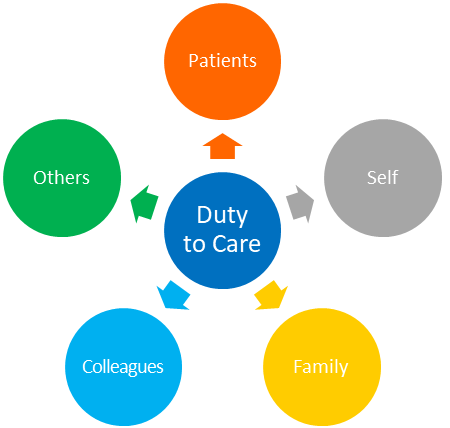
For the purpose of this document, “duty to care” is viewed from primarily an ethical, rather than a legal perspective. The Ontario Health Plan for an Influenza Pandemic states that a healthcare worker has “an ethical duty to provide care and respond to suffering. (OHPIP, 2008) The University of Toronto Joint Centre for Bioethics 2005 paper Stand on Guard for Thee reiterates the ethical duty to care that healthcare professionals owe the public. (Joint Centre for Bioethics, 2005)

Both documents do acknowledge that the duty to care is contextual and many factors can affect a practitioner’s ability to provide optimal patient/client care.

During a pandemic outbreak, several private day care centers close. An RT who works in the emergency department at a large teaching hospital is the single parent of a child who attends one of these day care facilities. The hospital is experiencing a significant increase in visits to the emergency department and several of the hospital’s staff RTs are already off sick. What is the best course of action for this particular RT?

The ethical principles are to act fairly, do good and do no harm.

In this circumstance, the RT is required to balance the needs of the RT’s patients/clients with the needs of their child. It is not clear that patient/client care would suffer if they did not come into work (e.g., there is other staff who can provide the same care). However, if they were unable to make other babysitting arrangements, the RT would not legally or morally be able to leave their child unattended. Members are encouraged to anticipate and seek to address factors that may interfere with their ability to carry out their professional duties.

During a severe respiratory outbreak, an RT is unwilling to come to work due to their concern that they will contract the illness and bring it home to their elderly father. Can they refuse to work under the Occupational Health and Safety Act?

The ethical principles are to act fairly, do good and do no harm

Respiratory Therapists care for patients with respiratory illnesses every day, and this is inherent in the work that they do. Additionally, an RT’s refusal to provide their services could potentially endanger the life, health, or safety of these patients. Therefore, in this circumstance, the RT is expected to fulfill the requirements of their job.

At times, multiple obligations can result in conflicting priorities which are quite specific to each individual. Therefore, each RT must ultimately balance their own reality with the best interest of their patient/client. When faced with managing conflicting duties, the expectation of the College is that its Members will, to the very best of their abilities, provide ethical, safe, and competent patient/client care.

S.43(1) of the Occupational Health & Safety Act (1990) delineates under what circumstance certain types of employees can refuse work due to fear of exposure to a hazard.  This act clearly articulates that hospital workers do not have a right of refusal to work if:

  • if the hazard is inherent in the work the employee does; or
  • when the employee’s refusal to work would directly endanger the life, health, or safety of another person.¹

FOOTNOTES

1. Occupational Health & Safety Act. (1990). Legislative Assembly of Ontario.

End of Life Decision Making

End of Life Decision Making

The legal rights of the patient/client at the end of their life are the minimum ethical requirements. Capable individuals have a right to make their own decisions regarding their medical care. If that capability is called into question, they have the right to have their capacity assessed. The HCCA outlines the process that must be followed if a patient/client is deemed incapable, which includes the appointment of a Substitute Decision Maker (SDM). (HCCA, 1996)  It is important to note, however, that the final decision as to the plan of care rests with the patient/client or SDM. Not only is consent to treatment required, it is also necessary for “withdrawing” or “withholding” treatment. (HCCA, 1996)

A newborn infant with severe spinal muscular atrophy type 1 is requiring continuous non-invasive positive pressure ventilation (NIPPV). Because the prognosis is grave, the physician in charge of care has determined it to be “everyone’s best interest” to remove the baby from the machine. However, the parents want the treatment to continue, in the hopes that they can eventually go home. The RT has been asked to remove the NIPPV. How should they proceed?

The ethical principles involved are respect for the patient/client’s free will, which conflicts with the RTs need to do good and do no harm.

The healthcare team may have solid medical evidence surrounding long-term survival of this child and quality of life for the family, and should share the predicted outcome with the parents. However, the parents are the guardians and therefore, able to make decisions on behalf of the child. If an agreement on the plan of care cannot be obtained, and if the healthcare team feels that the parent’s decision is not in the child’s best interest, the case should be presented to the Consent and Capacity Review Board. In the interim, however, the parent’s decision stands, and the RT should refrain from removing the infant from NIPPV.

For more information, please see the CRTO Responsibilities under Consent Legislation PPG at: www.crto.on.ca/pdf/PPG/UnderConsent.pdf

Ending the RT-Patient/
client Relationship

Ending the RT-Patient/Client Relationship

Sometimes it is necessary for an RT to end the therapeutic relationship with a patient/client.  If the services of the RT are being discontinued because the individual no longer requires them, then it is usually a matter of making sure all of the proper documentation is in place and that the patient/client’s primary physician has been informed.  If, however, the RT is no longer able to provide care to an individual still in need of services, then it is incumbent upon the Respiratory Therapist to ensure that care has been transferred to the most appropriate person and/or facility.

A patient/client being cared for by a home oxygen company has been formally warned twice that the oxygen will be removed due to safety concerns (i.e., smoking as well as unsafe handling and storage). On a subsequent visit the RT finds the patient smoking in their livingroom with the grandchildren playing nearby. How should the RT proceed?

The ethical principle involved is primarily the respect for free will, which must be balanced with the need to do good and do no harm.

Home care companies generally have explicit policies regarding oxygen and smoking. Failure to abide by this can result in removal of the oxygen for the safety of the patient, their family, and the healthcare team. The RT is required to follow organizational policies and work with the patient’s physician to find safe, alternative resolutions. Once the RT is satisfied all requirements have been met, they should remove the oxygen and instruct the patient to proceed to their local hospital. As always, documentation is extremely important.

It is important to note that if an RT is changing employers (e.g., moving from one home oxygen company to another) they should in no way endeavour to entice a patient/client to change companies as well. The therapist should, consider the best interest of the patient/client over their own needs.

Evidence-Based and Reflective Practice

Evidence-Based and Reflective Practice

In order to provide the highest level of quality patient care, RT’s must apply current and best practice guidelines and research in their clinical practice. Evidence-based medicine challenges the notion that practitioners should continue to adhere to “accepted” medical practices that are no longer relevant or validated. Rather, it is an RT’s responsibility to demonstrate professional excellence and practice competently and with integrity, ensuring that they seek opportunities for professional development and lifelong learning.

An internal medicine specialist has ordered an inappropriately high tidal volume (>10 ml/kg) for a patient/client with ARDS and has not written on order to ventilate to ABGs.

The hospital has a policy that the NHLBI ARDS Mechanical Ventilation Protocol should be implemented for individuals who meet the inclusion criteria. How should the RT proceed?

The ethical principle involved are to do good and do no harm.

First, the RT is required to act in the patient/client’s best interest. If the practitioner has sound reason to question any medical order, then they should immediately bring this to the attention of the individual who wrote the order. Sometimes a careful and well-informed explanation on the part of the RT can be enough to have the order changed. If not, then how the RT proceeds will vary depending on how detrimental they feel the existing order will potentially be for the patient/client. In this scenario, if the RT was not satisfied with the outcome of the discussion with the ordering physician, then there is usually another level of administration to take their concerns (e.g., chief of staff, administrator on-call, etc.). In the interim, the patient/client should be set on whatever set of parameters that are considered to be safe and everything must be carefully documented. All other staff caring for the patient/client (i.e. bedside nurse), should also be informed.

Interprofessional Collaboration

Interprofessional Collaboration

Interprofessional collaboration (IPC) refers to the positive interaction of two or more healthcare professionals who bring their unique skills and knowledge to assist patients/clients and their families with their health decisions. (EICP, 2005) There exists a large body of research confirming the benefits of IPC for patients/clients, the healthcare professionals, and the healthcare system. Each profession brings their own competency and skill set and working together as a collaborative team provides the opportunity to learn from each other.

The overall goal of IPC is to optimize patients’/clients’ access to the skills and competencies of a wide range of health professionals. In certain circumstances, optimal access care is best obtained by ensuring that as many practitioners as possible can provide a given service. In other instances, it is in the best interest of patient/client care to ensure that a select group of “experts” provide a specific service.

The ICU nurses at a community hospital have approached their administration (without consultation with the RT dept.) requesting they be permitted to perform arterial line insertion (a task which up until now has been performed only by the RTs).

The RTs react by taking their objections (without consulting with the ICU nursing dept.) to senior administration. What should have been done to ensure a collaborative process and what outcome would be in the best interest of optimal patient care?

The ethical principles involved are to do good and do no harm, balanced with the need to act fairly.

Although the process described in the scenario was a poor example of IPC, an argument could be made for either side having a valid point in the best interest of the patients/clients. In certain  practice settings, having the nurses also insert arterial lines would enhance patient/client’s access to the procedure. In other situations, having only the RTs do it would ensure that only the most practiced and skilled practitioner performs the procedure. The outcome is actually less important than the reasons why it was being requested or refuted. The primary concern must always be what is best to ensure optimal patient/client care, as opposed to “turf expansion or protection”.

Maintaining Professional Boundaries

Maintaining Professional Boundaries

The therapeutic relationship between an RT and their patient/client is one of empathy, trust and respect. It is important to acknowledge that there exists within this relationship an inherent power imbalance. The RT has access to specialized knowledge, and privileged information that the patient/client does not have. The RT also has the ability to advocate on behalf of the patient/client. Therefore, it is essential that RTs respect the relationship they have with their patient/client through effective communication, patient/client centered care and the maintenance of professional boundaries.

In a therapeutic relationship with a patient/client, the best interests of that individual are paramount, unless doing so would endanger the welfare of others. The patient/client’s vulnerability places the obligation on the RT to manage the relationship appropriately. Examples that the RT may be crossing professional boundaries in the RT’s therapeutic relationship are:

9

Disclosing personal problems to a patient/client;

9

Accepting gifts from a patient/client that could potentially change the nature of the relationship and influence the level or nature of care;

9

Spending time outside the therapeutic relationship with a patient/client; or

9

Becoming “friends” on social media.

RTs also have professional relationships with all other members of the healthcare team with whom they interact with as they carry out their duties. In some of these relationships, a power imbalance exists. (e.g., staff RT supervising Student RTs, Charge Therapist overseeing newer staff RTs). It is essential for the RT to adhere to the same standard for the maintenance of these professional relationships as they do in their therapeutic relationships.

An RT, acting in a Clinical Instructor capacity at a teaching hospital, receives a “friend request” on Facebook by a Student RT currently rotating through the hospital. The RRT accepts and they begin an exchange on-line of personal comments and photos. Has the RT crossed the professional boundaries?

The ethical principle involved is to act fairly.

Because an imbalance of power exists between the staff therapists and students, the RT is advised against engaging in a personal relationship with this individual and accepting a friend request. This may violate workplace conflict of interest policies, as well as cross professional boundaries.
An RT who works in a sleep lab is asked out on a date by a patient/client who had been assessed in their lab a week earlier. Has the RT failed to maintain appropriate professional boundaries?

The ethical principle involved is to act fairly.

Unfortunately, even when acting fairly, one can be perceived as otherwise (giving preferential treatment, for example). The RT would violate professional boundaries if the patient/client continues to be cared for at the sleep lab where the RT worked. The only way that a personal relationship would be permissible is if the therapeutic relationship had officially ended, and this must be clearly documented.

Resource Allocation

Resource Allocation

Certain emergencies (e.g., pandemics) as well as financial and human resource constraints,
make the consideration of how to manage conflicting duties all that more critical for
each healthcare professional. Under the extreme pressure that such an event can have
on the healthcare system, surge response strategies often need to be put into place to
ensure that the greatest number of patients/clients benefit from the available resources.
In these situations, the basic principles for ethical treatment of patients/clients must
remain. However, there sometime needs to be a shift in the focus from what is best for
each individual to what will benefit those most in need. Even less urgent situations may
necessitate making the best use of limited resources.

A patient/client who has suffered a head injury is being transported from a community hospital to a tertiary care centre. There are two RTs on nights at the community hospital and one is being asked to accompany the non-intubated individual on transport. This would leave the other RT to care for the entire hospital alone. What would be the best course of action?

The ethical principles involved are to do good and do no harm, balanced with the need to act fairly.

There are a great many variables when determining whether the RT should go out on the transport or remain in hospital. Many facilities have criteria set out in policy in order to assist the RT in establishing priorities in situations such as this. There is no one correct answer and it depends on factors such as the likelihood the patient/client going on transport will not be able to protect their airway, the level of current acuity at the hospital, etc. It is expected that the RT make a decision, with the greater good in mind.

Substitute Decision Maker

Substitute Decision Maker

The Health Care Consent Act (HCCA) defines capacity as the ability to understand
information necessary to make an informed treatment decision and appreciate the
reasonably foreseeable consequences of a decision or lack of a decision (HCCA, 1996). As
mentioned previously, if a patient/client is determined to be incapable with respect to
their medical care, a SDM may give or withhold consent on the individual’s behalf. It is
important to note, however that the SDM is required to honour the patient/client’s
wishes, if known to be articulated when they were capable. If there are no known
capable wishes, then the SDM must act in the patient/client’s best interest.

A 35 year old patient who is suffering from end-stage MS is admitted to the ICU in severe respiratory distress. They are unable to communicate and their prior wishes are not known to the healthcare team. However, the spouse, acting in his capacity as SDM, is demanding that the patient be placed on life support. The RT is called to intubate. Is the SDM acting in the patient/client’s “best interest” and how should the RT proceeded?

The ethical principles involved are to do good and do no harm, balanced with the respect for free will.

For one thing, it is difficult to determine if the husband is acting in his wife’s best
interest, as we do not know if she had any prior competent wishes, or what they might have been. Her family physician is someone who may know, as hopefully this is a conversation they would have had, knowing the likely course of her disease. Another consideration is whether her current respiratory distress is the result of something that is curable (e.g., pneumonia) or a result of the disease progression. If at all possible, the RT should try to avoid intubation until such time as it can be established that this is the best interest of the patient/client.

Transfer of Accountability (TOA)

Transfer of Accountability (TOA)

Communication of information between healthcare providers is a fundamental component of patient/client care. According to a study done by the U.S. Joint Commission on Accreditation of Healthcare Organizations in 2003, almost 70% of all sentinel events are caused by breakdown in communication. (Alvarado, K, et al., 2006) It is during the transfer of accountably (sometimes referred to as “transfer of care”) that there is the most significant risk of harm to the patient/client.

It is also the times when breaches in patient/client confidentiality frequently occur. Not only can information that should be passed on be missed or misunderstood, but it may also be generally inappropriate, or inappropriate for certain personnel to hear. It is essential when disclosing personal health information to remember who is in the patient/client’s circle of care. This term is not defined in the 2004 Personal Health Information Protection Act but has been generally accepted to be the healthcare providers who deliver care and services for the primary therapeutic benefit of the patient/client. It also covers related activities such as laboratory work and professional or case consultation with other healthcare providers².

Some organizations have implemented a standardized, evidence-based approach to TOA in order to improve the effectiveness and coordination of communication. Some hospital departments have utilized a checklist type format (e.g., code status, infection control requirements, risk concerns) to ensure that nothing important is overlooked during “shift change”. The CRTO encourages its Members to evaluate their own TOA processes and perhaps customize tools used within their own facility

During a verbal report in the staff lounge, an RT reveals to all those present that a patient/client seen in emergency during the previous shift had been brought in following a failed suicide attempt. The door of the lounge is open and nursing staff coming to and from work are passing by in the hallway. In addition, the patient/client is the relative of the Ultrasound Technician, who happens to be in the staff lounge when report is being given. What ethical values/principles have been violated and what steps could have been taken to prevent this from happening?

The ethical principles involved are to do good and do no harm.

The RT giving report has shown a lack of respect for the dignity of the patient/client in question. Also, the patient/client’s confidentially has been violated, as the information was not disclosed in a manner that prevented those outside the individual’s circle of care from being privy to it. Every effort needs to be made to ensure the information shared at handover is accurate, complete and that the risk of inappropriate disclosure of personal health information is minimized.

An RT is currently working part time at one hospital and casual at another. One evening, they needed to leave prior to shift change, in order to arrive on time for their shift at the other facility, but the RT that is relieving them had not arrived yet. If they have gotten permission from their employer to leave early, is it permissible to do so according to the CRTO?

The ethical principles involved are to do good and do no harm.

The RT is responsible for providing respiratory care up to the point of the transfer of
accountability and must be physically present to provide a verbal report, unless there are other organizational mechanisms in place. This situation has the potential for significant risk (e.g., The second RT is delayed in arriving for their shift).

The fact that your employer permits something is only one part of the equation. As a regulated healthcare professional, your ultimate accountability is to your patients.

FOOTNOTES

2. Transfer of Accountability: Transforming Shift Handover to Enhance Patient Safety.

Social Media

Social Media

Social media can have a positive impact on the healthcare community, including facilitating communication, collaboration, and knowledge distribution. It is important to remember however, that there are potential consequences if the content is interpreted by others as improper or use of these platforms is unprofessional.

Many facilities and companies have policies regarding social media use which often reflect their specific organizational expectations and values. As an individual who is associated with these organizations, it is important to follow these guidelines when conducting themselves in a recorded format.

Respiratory Therapists have a professional and moral obligation to conduct and represent themselves in a manner which maintains and enhances the reputation and perception of the profession to the public, such that trust, and confidence is built and maintained. The CRTO would like to remind RT’s that they must comply with the expectations of the profession, including legislative, and use their professional judgement to ensure that their social media posts align with the CRTO’s Standards of Practice and Commitment to Ethical Practice document.

Prior to posting, please consider these values:

9

Accountability and integrity: Your posts may be interpreted as a direct reflection of yourself, your organization, and your profession, and could be potentially damaging to reputations. Your professional and personal lives are intertwined. Reflect on your own intentions and the possible consequences.

9

Professionalism: As a regulated healthcare worker, your posted content may be received as medical or professional advice. Weigh the risks and benefits of the information you share. You are required to always uphold and maintain a professional image on your social media accounts. Failure to do so could be considered Professional Misconduct. About the Standards | CRTO Standards of Practice

9

Privacy and confidentiality: Breaches are often unintentional and inadvertent. Photos and content may hold identifying details that can reveal confidential information surrounding a patient, their family, or the organization. This can have severe consequences to not only yourself, but to the organization under privacy legislation. Confidentiality: Standard 11 | CRTO Standards of Practice

9

Patient/client boundaries: avoid dual relationships with patients/families.

9

Communicate respectfully! Your online profile should reflect the professional that you are.

For more information on how social media impacts on RT Practice, please refer to the following documents:

CRTO Standards of Practice

9

Standard 3.6: Refrain from making false, deliberately misleading or offensive statements, contrary to the interests of the public or the honour and dignity of the profession, whether orally or in writing;

9

Standard 8.6: refrain from making a representation about a remedy, treatment, device or procedure for which there is no generally accepted scientific or empirical basis;

9

Standard 12.7: Communicate electronically and through social media in a manner that respects therapeutic and professional relationships; and

9

Standard 13.26: Behave in a professional manner that presents a positive image of Respiratory Therapy to the community.

Does an RT who is diagnosed with HIV have a duty to report that to their patients?

While each person is entitled to their own philosophies and beliefs, as a regulated healthcare professional, there is a moral and professional obligation to be sensitive and cognizant of their audience. An RT is always held to a higher personal and professional standard and the information they post, may be held by others, to be valid and correct. If the information they post is viewed as contrary to Public Health guidelines, they are in violation of the CRTO standards (Standard 8 | Evidence Informed Practice).

Steps to Ethical Decision-Making

Identify the ethical issue

(i.e.) what principle(s) is in conflict

Identify who is, or should be, involved in coming to a decision

(e.g.) patient/client, family, hospital administration, legal counsel

Determine if you have all the facts of the issue

Identify factors that governs the decision-making process

(e.g.) legislation, professional regulatory standards, organization polices

Determine possible course(s) of action

Choice #1

What are the ethical values & principles related to this choice?

What are the barriers, risks & benefits, of this choice?

Choice #2

What are the ethical values & principles related to this choice?

What are the barriers, risks & benefits, of this choice?

Choose a course of action, implement & document it

Evaluate the outcome

(i.e.) is further action needed, what did you learn & what can be done to prevent similar future occurrences?

Bloodborne and Other Infectious Agents

Bloodborne and Other Infectious Agents

Respiratory Therapists have an ethical obligation to protect the public from any potential transmission of bloodborne pathogens and other infectious diseases. The College encourages all Members to take every possible precaution to prevent transmission of infection from themselves to their patients and others. It is the College’s position that:

9

Members must be vigilant and rigorously adhere to Routine Practices, Additional Precautions, and the use of Personal Protective Equipment (PPE) when required.³,⁴,⁵

9

Members providing direct patient care are encouraged to keep their immunizations up to date (e.g. Hepatitis, Influenza, measles, mumps, rubella, Tuberculosis, and Varicella).

9

Members have an ethical obligation to know their serologic status with respect to bloodborne pathogens such as HIV and Hepatitis, although they are not obligated to disclose it to their patients.

9

Members have an ethical obligation to know their status with respect to other infectious pathogens such as Tuberculosis and Varicella, although they are not obligated to disclose it to their patients.

9

Members who are positive for infectious pathogens should seek advice to assist with assessing the risk of transmitting infectious agents to others. The College may provide professional practice advice and links to resources (for example but not limited to, Public Health Ontario’s Infectious Diseases Programs and Services), aimed at assisting Members in making safe and ethical decisions regarding their practice.

9

Members who are positive for infectious pathogens (especially those who perform high risk, exposure-prone procedures) should take all necessary precautions, including modifying their practice if necessary, to prevent transmission to others.

#3, #4 See Best Practices for Infection Prevention and Control Programs in Ontario In All Health Care Settings 3rd Edition (PIDEC, 2012) bp-ipac-hc-settings.pdf (publichealthontario.ca)

#5 See CRTO’s Clinical Best Practice Guideline Infection Control (2016) Layout 1 (crto.on.ca)

#6 Government of Canada. (2016) Immunization of workers: Canadian Immunization Guide – Canada.ca

#7 For Blood Borne Disease Surveillance Protocol for Ontario Hospitals (2018) Blood Borne Diseases Protocol (November 2018).pdf (oha.com)

#8 Clinical Infectious Diseases, Volume 41, Issue 1, 1 July 2005, Page 136 Clinical Infectious Diseases, Volume 41, Issue 1, 1 July 2005, Page 136, https://doi.org/10.1086/431928

FOOTNOTES

3. See Best Practices for Infection Prevention and Control Programs in Ontario In All Health Care Settings 3rd Edition (PIDAC, 2012) bp-ipac-hc-settings.pdf (publichealthontario.ca)

4. For Public Health Ontario/Provincial Infectious Disease Advisory Committee’s (PIDAC) Knowledge Products (2012) click here

5. See CRTO’s Clinical Best Practice Guideline Infection Prevention and Control (2011) Layout 1 (crto.on.ca)

6. “Annual influenza vaccination should be a condition of continued employment in, or appointment to, a health care organizations” (PIDAC, 2012, p.32)

7. For Blood Borne Diseases Surveillance Protocol for Ontario Hospitals  (2018) Blood Borne Diseases Protocol (November 2018).pdf (oha.com)

8. Clinical Infectious Diseases, Volume 41, Issue 1, 1 July 2005, Page 136 Clinical Infectious Diseases, Volume 41, Issue 1, 1 July 2005, Page 136, https://doi.org/10.1086/431928

Example

Does an RT who is diagnosed with HIV have a duty to report that to their patients?

The RT does not have a legal obligation to routinely disclose their serologic status to patients to obtain informed consent for a procedure, because healthcare workers have the right to privacy and confidentiality of their own personal medical information. However, from a moral and professional obligation, all efforts must be made to protect the patient from any exposure or harm, potentially even altering their practice. Organizational policy may differ with respect to disclosure.

If a patient is exposed to the RT’s blood/bodily fluids at some point during treatment, proper follow-up through their organizational process must occur and the patient be informed of the nature of the exposure. Proper post-exposure testing, and treatment is required, although all attempts to protect the identity of the RT must be made.

GLOSSARY

Accountability

Taking responsibility for decisions and actions, including those undertaken independently and collectively as a member of the healthcare team; accepting the consequences of decisions and actions and acting on the basis of what is in the best interest of the patient/client.

Apology/ Apology Act

An expression of sympathy or regret, a statement that a person is sorry or any other words or actions indicating contrition or commiseration, whether or not the words or actions admit fault or imply an admission of fault or liability in connection with the matter to which the words or actions relate. The 2009 Apology Act aims to increase transparent and open communication among health care professionals, patients and the public. (Apology Act, 2009)

Autonomy

Recognizing that a patient/client has the right to accept or reject any Respiratory Therapist and any care recommended or ordered.

Circle of Care

The term “circle of care” is not a defined term under the PHIPA or the federal privacy legislation, the Personal Information and Protection of Electronic Documents Act (PIPEDA). The term emerged in a series of questions and answers developed by Industry Canada called the PIPEDA Awareness Raising Tools (PARTs) initiative for the Health Sector. There it was defined as follows:

9

The expression includes the individuals and activities related to the care and treatment of a patient/client. Thus, it covers the healthcare providers who deliver care and services for the primary therapeutic benefit of the patient/client and it covers related activities such as laboratory work and professional or case consultation with other healthcare providers.

Competent/Competency

Having the requisite knowledge, skills and judgement/abilities to perform safely, effectively and ethically and applying that knowledge, skills and judgement/abilities to ensure safe, effective and ethical outcomes for the patient/client.

Confidentiality

In Canada, a healthcare professional owes an ethical and legal duty of confidentiality to his or her patients. However, this right of confidentially is not absolute. A health information custodian may disclose personal health information if they reasonably believe there is a risk of harm [PHIPA s.40(1)].

Consent & Capacity Review Board (CCRB)

An independent body created by the provincial government of Ontario under the Health Care Consent Act.

Conflict of Interest

A conflict of interest exists where a Respiratory Therapist engages in any private or personal business, undertaking or other activity or has a relationship in which,

  • the Respiratory Therapist’s private or personal interest directly or indirectly conflicts, may conflict or may reasonably be perceived as conflicting with their duties or responsibilities as a healthcare professional; and/or
  • the Respiratory Therapist’s private or personal interest directly or indirectly influences, may influence, or may reasonably be perceived as influencing, the exercise of the member’s professional duties or responsibilities.

It is important to note that a conflict of interest may be actual or apparent (perceived).

Critical incidents

An unintended event that occurs when a patient/client receives treatment in the hospital that results in death, injury or harm to the patient/client and does not result primarily from the patient/client’s underlying medical condition or from a known risk inherent in providing the treatment. (Ont. Reg. 423/07, 2007)

Ethical/ Ethical Framework

Relating to accepted professional standards of conduct; of or relating to principles of right and wrong in behaviour.

Health Care Consent Act (HCCA)

The HCCA outlines the requirement for healthcare professionals who proposes a treatment or plan of care to ensure that they receive informed consent from the patient/client or their substitute decision maker before proceeding.

Health Information Custodian

Defined in PIHIPA as “a person or organization who has custody of control of personal health information” [PHIPA, s.3(1)]. This is generally the employer.

Healthcare Team

Peers, colleagues, and other healthcare professional (regulated and non-regulated).

Human Rights Code

Respiratory Therapists have a responsibility to understand and respect individuals regardless of differences that may include but are not limited to: race; ancestry; place of origin; colour; ethnic origin; citizenship; creed; sex; sexual orientation; age; marital status; family status or disability. (Ont. Human Rights Code, 1990)

Judgement

Judgement is the cognitive process of reaching a decision or making an observation.

Knowledge

Is a body of information applied directly to the performance of a function.

Known Capable Wishes

The Health Care Consent Act (HCCA) refers to “know capable wishes”, which refers to the expressed wishes of a patient/client. This legislation recognizes that any individual, while capable, may express their wishes with respect to treatment decisions that are to be made on his or her behalf if he or she becomes incapable.

Near Misses

These particular occurrences are identified as errors but do not result in harm to the patient/client. Therefore, they may not require disclosure to patients/clients in all cases and is generally dealt with at an organizational level. The aim is to identify the error and seek to correct the reason for it’s occurance (e.g., system errors).

Patient/Client

An individual who requires care (and can include or their substitute decision maker).

Professional Relationships

Relationship that a healthcare professional engages in with peer and colleagues in order to carry out their professional duties.

Regulated Health Professions Act (RHPA)

Legislation passed in 1991 that sets out the general purpose of the regulatory model for health professionals in Ontario. It identifies the 14 controlled acts that are potentially harmful if performed by unqualified persons and sets out the list of which professions will be self governed under the Act.

Relevant

Having significant and demonstrable bearing.

Respiratory Therapist (RT)/ Registered Respiratory Therapist (RRT)

Refers to Graduate (GRT) and Registered Respiratory Therapists (RRT) who have completed an approved course of study and successfully passed the Canadian Board of Respiratory Care (CBRC) examination.

Respiratory Therapy Act (RTA)

Legislation passed in 1991 which outlines, among other things, the scope of practice of the profession of Respiratory Therapy in Ontario and the controlled act that are authorized to RTs.

Substitute Decision Maker (SDM)

Sometimes required to assist with decision-making for a patient/client in hospital who is
considered mentally incapable to make care or treatment decisions. The Health Care Consent Act contains a guide to identifying who the legally authorized SDM is, based on hierarchy of people. The highest-ranking person on the hierarchy who is willing and able to make decisions regarding healthcare for the patient/client becomes the SDM. (HCCA, 1996)

Surge Response Strategies

Utilized to ensure that those most likely to benefit from care will be able to receive it. Examples to strategies are adherence to the triage principles, patient/client and staff reallocation and alterations in standards of care.

Therapeutic Relationship

Relationship that a healthcare professional engages in with patient/client as well as their family members in order to carry out their professional duties.

Transparency

The act of being easily understood, free from deceit and straightforward in all interactions, sharing of information and knowledge, and outcomes.

REFERENCES

  1. Alvarado, K., Lee, R., Christoffersen, E, Fram, N., Boblin,S.,  Poole, N., Lucas, J., &  Forsyth, S. (2006). Transfer of Accountability: Transforming Shift Handover to Enhance Patient Safety. Healthcare Quarterly, 9(Sp), 75 – 79.
    Retrieved from: http://www.longwoods.com/product.php?productid=18464&cat=452&page=1
  2. Anderson, J., Deravin, L. (2020). Transfer of Responsibility and Accountability of Patient Care. Journal of Hospital Administration, vol 9,no 6
    Retrieved from: http://www.sciedupress.com/journal/index.php/jha/article/view/19657/12128n (sciedupress.com)
  3. Apology Act. (2009). Legislative Assembly of Ontario.
    Retrieved from: Bill 108, Apology Act, 2009 – Legislative Assembly of Ontario (ola.org)
  4. Baker, G.R. The Canadian Adverse Events Study: the incidence of adverse events among hospital patients in Canada. CMAJ. May 25, 2004; 170 (11).
  5. Beauchamp TL, Childress JF. (2008). Principles of biomedical ethics, 6th ed. Oxford,
    England: Oxford University Press.
  6. Canadian Medical Association (2018) CMA Code of Ethics and Professionalism.
    Retrieved from: https://www.who.int/news/item/27-06-2017-joint-united-nations- statement-on-ending-discrimination-in-health-care-settingslism – PD19-03.pdf
  7. Canadian Patient Safety Institute.  (2011) Canadian Disclosure Guidelines. https://www.patientsafetyinstitute.ca/en/toolsResources/disclosure/Documents/CPSI%20Canadian%20 https://www.patientsafetyinstitute.ca/en/toolsResources/disclosure/Documents/CPSI%20Canadian%20Disclosure%20Guidelines.pdfDisclosure%20Guidelines.pdf
  8. College of Respiratory Therapists of Ontario (CRTO). (2014) Conflict of Interest Professional Practice Guideline.
    Retrieved from: http://www.crto.on.ca/pdf/PPG/conflict_of_interest.pdf
  9. College of Respiratory Therapists of Ontario (CRTO). (2014). Responsibilities under Consent Legislation Professional Practice Guideline.
    Retrieved from: http://www.crto.on.ca/pdf/PPG/UnderConsent.pdf
  10. College of Respiratory Therapists of Ontario (CRTO). (2019). Communications. Standards of Practice. Standard 3 | CRTO Standards of Practice
  11. College of Respiratory Therapists of Ontario (CRTO). (2019). Confidentiality. Standards of Practice.  Standard 11 | CRTO Standards of Practice
  12. College of Respiratory Therapists of Ontario (CRTO) (2019). Professional Boundaries. Standards of Practice.  Standard 12 | CRTO Standards of Practice
  13. Denise Sese, MD, Mahwish U. Ahmad, MD, MPH and Prabalini Rajendram, MD
    Ethical considerations during the COVID-19 pandemic. Cleveland Clinic Journal of Medicine. June 2020.  Retrieved from: Ethical considerations during the COVID-19 pandemic | Cleveland Clinic Journal of Medicine (ccjm.org)
  14. Enhancing Interdisciplinary Collaboration in Primary Care (EICP). (2005). The Principles and Framework for Interdisciplinary Collaboration in Primary Health Care
    Retrieved from: Enhancing Interdisciplinary Collaboration in Primary Health Care in Canada (rnao.ca)
  15. Gillon R. (1994). Medical ethics: four principles plus attention to scope.  British Medical
    Journal, 309(6948), 184-8.
  16. Health Care Consent Act (HCCA). (1996). Legislative Assembly of Ontario.
    Retrieved from: http://www.e-laws.gov.on.ca/html/statutes/english/elaws_statutes_96h02_e.htm
  17. Health Ethics https://healthethics.ca/the-duty-to-provide-care/ to Provide Care – Health Ethics
  18. Information and Privacy Commissioner. (2015) Circle of care: sharing person health information for health care purposes.
    Retrieved from: https://www.ipc.on.ca/wp-content/uploads/Resources/circle-of-care.pdf
  19. International Nurse Regulator Collaborative. Social Media Use: Common Expectations for Nurses. (2016, December). Retrieved from:    https://www.cno.org/globalassets/docs/prac/incr-social-media-use-common-expectations-for-nurses.pdf
  20. Joint Commission on Accreditation of Healthcare Organizations (JCAHO). (2020) Sentinel Event Statistics.
    Retrieved from: http://www.jointcommission.org/SentinelEvents
  21. Liddell K, Skopek JM, Palmer S, et al. Who gets the ventilator? Important legal rights in a pandemic. Journal of Medical Ethics 2020;46:421-426.
  22. Ministry of Health and Long-Term Care. (2008). Ontario Health Plan for an Influenza Pandemic. Chap. 2, 2 – 10.
    Retrieved from: http://www.health.gov.on.ca/english/providers/program/emu/pan_flu/ohpip2/plan_full.pdf
  23. Ministry of Health and Long-Term Care (2020).  Emergency Planning and Preparedness.
    Retrieved from: http://health.gov.on.ca/en/pro/programs/emb/default.aspx?pro
  24. Nyblade, L., Stockton, M.A., Giger, K. et al. Stigma in health facilities: why it matters and how we can change it. BMC Med 17, 25 (2019). https://doi.org/10.1186/s12916-019-1256-2
  25. Occupational Health & Safety Act. (1990). Legislative Assembly of Ontario.
    Retrieved from: http://www.e-laws.gov.on.ca/html/statutes/english/elaws_statutes_90o01_e.htm
  26. Ontario Government. (2020). Personal Health Information Protection Act.
    Retrieved from:
    https://www.ontario.ca/laws/statute/04p03
  27. Ontario Health. (2021). Mental Health and Addictions Centre of Excellence
    Retrieved from: Equity, Inclusion, Diversity and Anti-Racism | Ontario Health
  28. Ont. Human Rights Code. (1990). Legislative Assembly of Ontario. R.S.O. 1990, s.1c, H.19.
    Retrieved from: http://www.e-laws.gov.on.ca/html/statutes/english/elaws_statutes_90h19_e.htm
  29. Ontario Human Rights Commission.  Age Discrimination and Healthcare.
    Retrieved from:  https://www.who.int/news/item/27-06-2017-joint-united-nations-  statement-on-ending-discrimination-in-health-care-settingssheet) | Ontario Human Rights Commission (ohrc.on.ca)
  30. Ont. Regulation 423/07. (2007). Legislative Assembly of Ontario.
    Retrieved from: http://www.e-laws.gov.on.ca/html/source/regs/english/2007/elaws_src_regs_r07423_e.htm
  31. Public Health Agency of Canada (2019). Guideline on the Prevention of Transmission of Bloodborne Viruses from Infected Healthcare Workers in Healthcare Settings.
    Retrieved from: https://www.canada.ca/content/dam/phac-aspc/documents/services/infectious-diseases/nosocomial-occupational-infections/prevention-transmission-bloodborne-viruses-healthcare-workers/guideline_accessible_aug-2-2019.pdf
  32. Reach. Beyond Domestic Abuse.
    Retrieved from: 6 Different Types of Abuse – REACH (reachma.org)
  33. University of Toronto Joint Centre for Bioethics Pandemic Influenza Working Group. (2005). Stand on guard for thee: ethical considerations in preparedness planning for pandemic influenza. University of Toronto Joint Centre for Bioethics.
  34. World Health Organization. (2017) Joint United Nations Statement on Ending Discrimination in Healthcare Setting.
    Retrieved from: https://www.who.int/news/item/27-06-2017-joint-united-nations-statement-on-ending-discrimination-in-health-care-settingsns statement on ending discrimination in health care settings (who.int)